
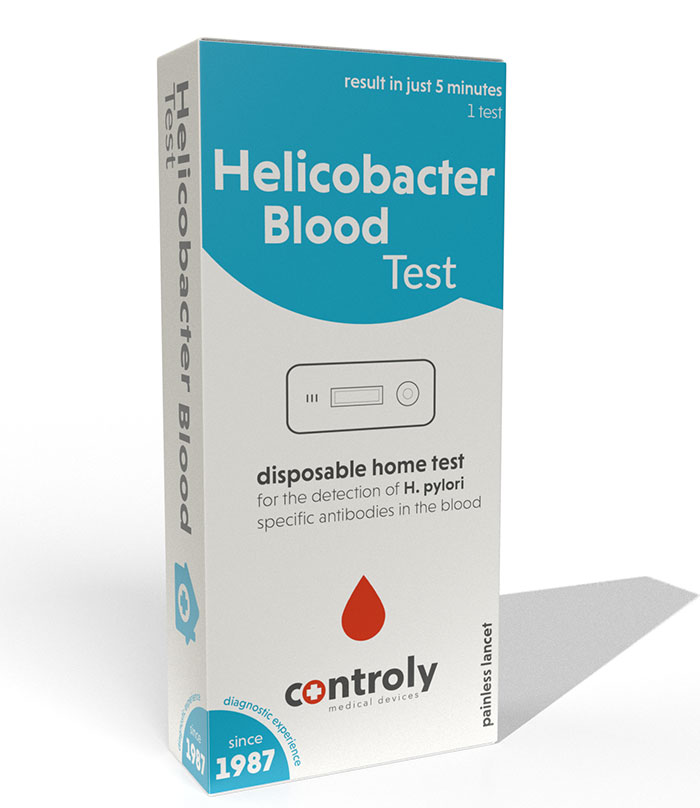

Helicobacter Blood Test
The IgG antibodies detected by the test are produced by the body after contact with the H. pylori bacterium. Their presence indicates an infection (current or past). H. pylori colonizes the stomach and duodenum. It can damage their mucosa, leading to the formation of erosions, which over time (untreated) can turn into ulcers.
Stomach ulcers cause unpleasant symptoms and are also potentially life-threatening: they can perforate the walls of the stomach or turn into cancer.
Important pour le pharmacien
The test detects anti-H. pylori antibodies. Antibodies are the body’s response to the presence of a pathogen. Please note that antibodies persist in the blood long after the infection has healed! For
example, if the patient wants to check the effectiveness of the eradication of H. pylori, he should be offered the Helicobacter stool antigen test.
The H. pylori bacterium tends to run in the whole family if one of the household members is a carrier. Therefore, the test can also be recommended to the patient’s relatives.
If the patient suffers from recurrent herpes or regular upper respiratory tract infections, it is worth recommending that he be checked for the presence of bacteria in the stomach.
Important pour le patient
H. pylori is easy to get infected with. Kissing someone who is infected, the use of the same cutlery or the same dish is enough. The presence of H. pylori may be suggested by abdominal pain, bloating, heartburn, nausea, vomiting, constipation, bad breath, frequent belching. H. pylori can cause a lack of appetite and symptoms outside the digestive system: poor skin condition and problems with immunity.
They are related to the fact that the body is struggling “in the background” with a chronic infection, which absorbs part of its defense capabilities.
blood
result in 5 minutes
1 test